
Noticing What Is Already There
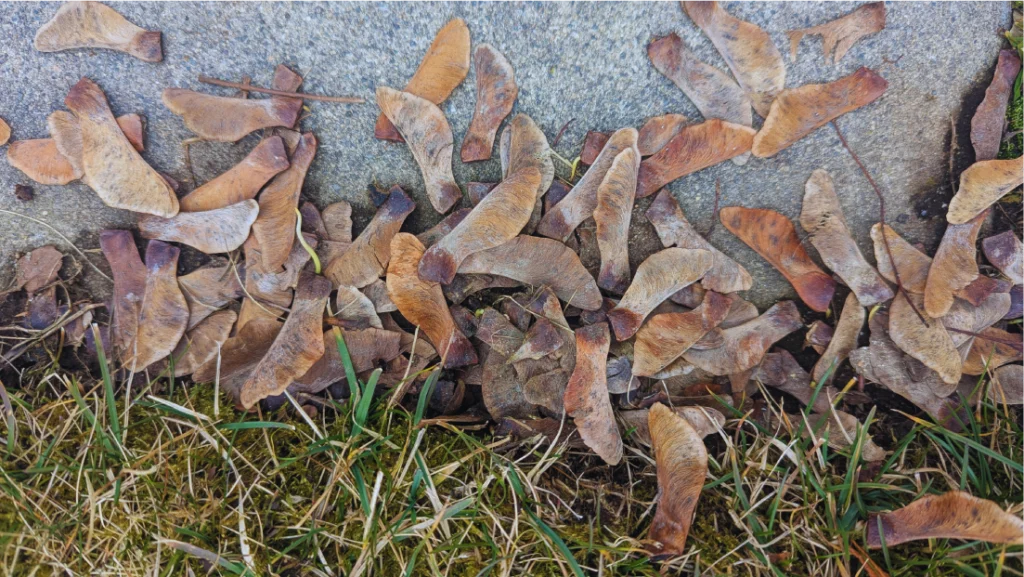
I have been working on stepping away from the worktable and walking every day, which gives me the opportunity to observe and find patterns or inspiration in nature. Recently, on a walk with my family, the kids wanted to try a new route. Just a few steps in, I noticed the sidewalk was covered in maple seed pods, or “helicopters” as we called them as kids. They were scattered everywhere, overlapping in loose clusters, some caught along the edges of the pavement and others resting flat as if they had just landed.
I stopped to take a few pictures, curious about how I might use the shapes later. The wings were delicate but distinct, each one slightly different from the next. Before we moved on, I picked up a handful to bring home, thinking they might work in a miniature project as well.
During these walks, I try to slow down and notice small details that are easy to miss when you’re focused on getting somewhere. Looking closely at something ordinary can reveal patterns, textures, and forms that feel surprisingly intentional. Sometimes inspiration is not something we have to search for, but something we simply have to notice, and when you’re in a slump simply getting out can be a helpful reset.
Worktable Small Spark
This week at the worktable, we’re turning our attention outward and working from observation. Inspiration does not always come from inside our sketchbooks. Sometimes it is already waiting for us in the natural world, if we take the time to notice it.
On a recent walk, I collected a few maple seed pods, often called “helicopters,” to use as a simple subject. They are small, easy to find, and full of interesting shapes and details. Using something ordinary keeps the focus on looking closely rather than trying to invent something new.
This exercise is not about making a perfect drawing. It is about slowing down and studying one small object from a few different perspectives. You do not need special tools for this, just something to draw with and a surface to draw on. If maple seed pods are not available where you live, any small natural object will work just as well. This week’s prompt is:
Sketch the seed pod three ways:
- From observation
- From memory
- Simplified or stylized
Ways to Approach
- Keep It Simple:
Line drawing only. - Add a Twist:
Add Color - Stretch It:
Refine the stylized version into a design-ready shape.
From My Sketchbook
For this prompt, I started by sketching the general shape of the maple seed pod from memory. I worked quickly and kept it simple, focusing more on the overall form than the small details. That first sketch felt like a way to get familiar with the shape and notice what stood out most in my mind after seeing it on my walk.
After that, I pulled up my reference photo along with a few others and spent more time drawing different seed pods with greater detail. Looking more closely helped me notice how much variation there was from one pod to the next. Some were narrower, some more curved, and each one had its own subtle character. Slowing down with reference gave me a better understanding of the structure and helped me see more than I had in the first quick sketch.
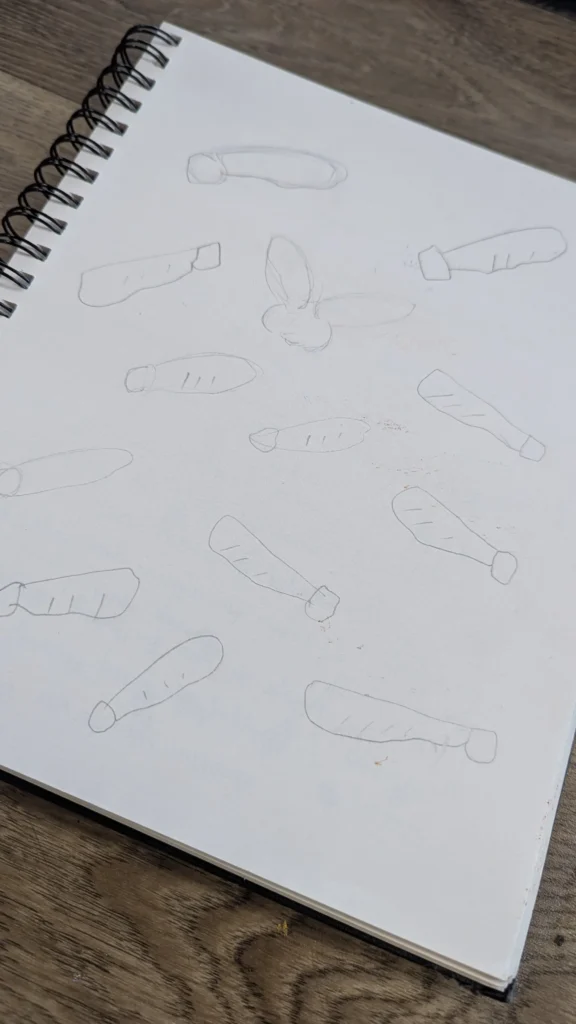
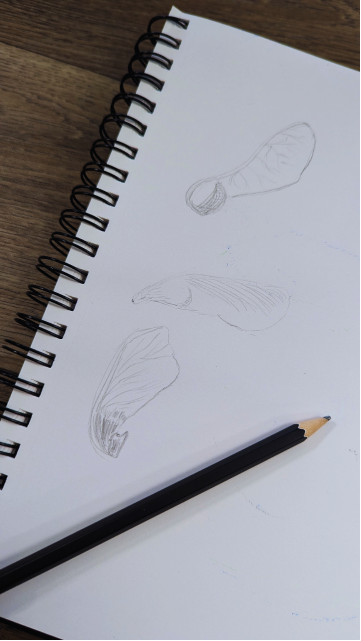
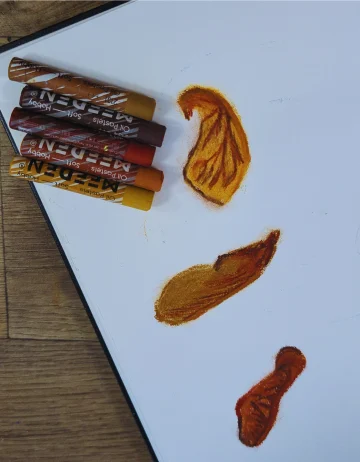
On the third try, I switched to oil pastels, which is the same medium I used in last week’s Worktable prompt. That gave me a chance to continue exploring a material that still feels a little new to me while also revisiting the same subject in a different way. I also added the use of a glove to help blend the colors. I liked how this process moved from quick memory, to close observation, to experimentation. It made the exercise feel less like drawing one object over and over, and more like gradually getting to know it.
Why This Helps
Getting outside and going for a walk has many benefits on its own, but it can also be a powerful tool when you are facing a creative block. Stepping away from your workspace and into a different environment helps refresh your mind and sharpen your observation skills. Noticing shapes, textures, and small details in the natural world often leads to ideas that would not appear while staring at a blank page.
My hope is that this exercise feels simple and enjoyable rather than demanding. These sketches are not meant to be finished artworks, but small studies that capture what you see and spark future inspiration. Working from real objects also helps you build a visual library based on life, which can make your designs and ideas feel more grounded and personal over time.
Until Next Week
Sometimes inspiration comes from simply slowing down long enough to notice what is already around you. Even a small study of an ordinary object can reconnect you to the act of looking and making without pressure. If you try this exercise, I would love to see what you discover and how you interpret it. So make sure to tag me on social media. Remember that little observations often grow into bigger ideas over time. I’ll meet you back at The Worktable next week.
♥️ Kelly
Leave a Reply